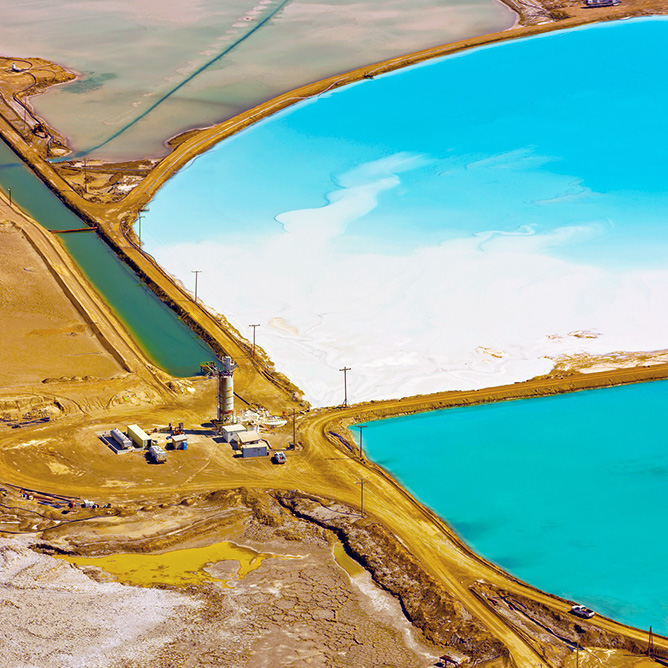
Lithium
Lithium is more than a buzzword. It’s a key player in the energy transition already shaping how the world powers itself. As demand for this critical mineral soars, so do the legal questions around lithium extraction, ownership, and royalty rights.

Lithium is the next big U.S. mineral.
The U.S. is seeing a lithium surge with major commercial development in Arkansas, Louisiana, Texas, and Utah. In Arkansas, lithium-rich brines within the Smackover Formation are drawing investment from well-known oil and gas operators. The same is happening in Utah’s Paradox Basin and Great Salt Lake. Arkansas formally recognized lithium in brine as mineral in 2018, opening the door to leasing and royalty negotiations under existing legal frameworks.
Lithium and the law
For decades, oilfield brine — also known as produced water — was seen as just a byproduct of oil and gas extraction. Once considered a liability for operators, produced water is now viewed as a potential asset. It’s a shift with implications for title, lease terms, and ownership rights.
Ownership of produced water doesn’t always include the minerals contained within it. This raises important questions around brine leases, royalty entitlements, and the extent to which lithium brine extraction is covered by existing contracts.
As oil and gas companies explore new lithium extraction methods, they face several legal uncertainties:
- Is lithium covered by existing oil and gas leases?
- Does ownership lie with the surface owner, leaseholder, or a separate mineral interest?
- And if lithium isn’t mentioned in the lease — what happens next?
In states like Arkansas, the law is clear: lithium is a mineral. However, in Texas, things are murkier. The state has yet to formally classify lithium as a mineral, leading to different interpretations in recent litigation.
Cases like Cactus Water Services, LLC v. COG Operating, LLC show that oil and gas operators may own the produced water — but the minerals inside? That’s still up for debate. Until there’s a clearer legal standard, operators may be exposed to title risk, contract disputes, or regulatory delays.
Oil and gas companies are uniquely positioned to enter the lithium space. They already manage brine infrastructure, understand complex subsurface rights, and have a presence in key formations. But legal exposure looms if brine leases and royalty terms aren’t written to match the moment.
To do things right, operators need to:
- Review and revise existing leases to explicitly address lithium
- Structure royalty agreements that reflect the mineral’s value
- Navigate state-level classification and permitting
- Anticipate conflicts related to title, ownership, and surface use
OG knows lithium
Oliva Gibbs has been working in the brine since before it was cool. Our attorneys advise operators at the leading edge of the lithium boom and have deep experience in mineral title law and lease negotiation in Arkansas, Texas, Utah, and more.
We help clients:
- Draft and amend lease language to speak to lithium rights
- Analyze lithium royalty contracts
- Resolve ownership conflicts tied to produced water
- Stay ahead of evolving lithium regulation
The intersection of oil, gas, and lithium is complex, but you don’t have to go it alone.
Whether you need help drafting a brine lease or advancing your lithium exploration project, Oliva Gibbs offers trusted legal support rooted in mineral title, transactional, and regulatory experience.



Navigating lithium? Start here.
Schedule a consultation today to speak with an attorney at the forefront of lithium law.