Episode 5
OG Talks: Good Energy – Transactions in Oil and Gas
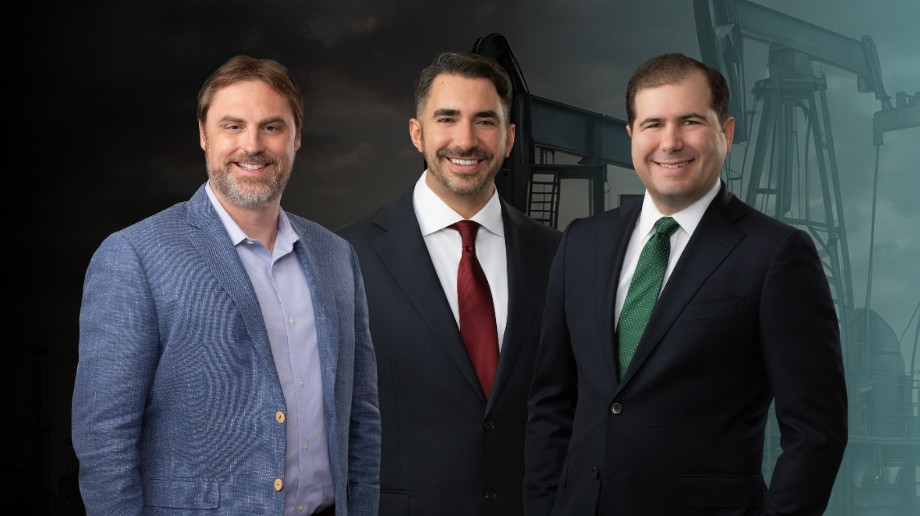
In this episode, Co-owners Brad Gibbs and Zack Oliva sit down with Director of Transactions Patrick Schenkel to dive into Oliva Gibbs’ transactions practice and its critical role in the oil and gas industry. From asset and lease transactions to multi-jurisdictional due diligence, our team provides insights into navigating complex deals across states like Texas, Louisiana, and North Dakota.
Key topics covered:
- The importance of defect limitations in oil and gas transactions
- When to engage local counsel for asset acquisitions
- Navigating due diligence in large-scale transactions
- Managing permitted encumbrances and PSA negotiations
- The future of Oliva Gibbs’ transactions practice and its expansion goals
Transcript
Thank you for joining us for this edition of OG Good Energy Talks. My name is Brad Gibbs with Aleva Gibbs. I’m here today with my partner, Zach Aleva, and my partner, Patrick Schenkel. And we’re here today to talk about the transactional practice at OG. Zach, how are you doing today?
Best day in my life. You?
Love to hear that.
Patrick? Doing great. Thanks for having me, Brad.
Happy to have you guys. Okay. Like I said, we’re gonna be talking a little bit about, our approach to transactional practice in the oil field. We do a lot of asset and lease transactions, in particular, a lot of due diligence projects across about a dozen states. We often act as local counsel, and partner with other firms, and then sometimes we handle the transactions soup to nuts on our own. Patrick, I’m gonna ask you a few questions today. First of all, let’s talk about, defect limitations in a transaction, And I’m talking here about thresholds and deductibles.
Are these generally deal specific, or is there a general standard to use when negotiating these numbers?
They’re very much deal specific and really jurisdictional specific as well. You’re really looking at, the size of potentially the leases or the wells you’re looking to acquire, the value placed on those. That’s all gonna come into consideration when you’re looking to place a number on either the threshold or the deductible limit. There are some general standard percentages that can go by on those, but you really wanna look at it more jurisdictionally, make sure that you’re taking that into account and how you’re trying to build out what you’re gonna be able to defect and if you will be able to even be able to claim a defect.
So in your opinion, it makes a big difference whether or not the transaction is in Louisiana or New Mexico or Texas or North Dakota, how you might wanna set those deducts, how you might wanna approach, defects and defect limitations and and those types of Yeah.
Even more it’s important on the the size of the leases you may be looking to acquire. So if you have a, ten thousand acre lease in New Mexico or in Louisiana or North Dakota, it may be the same threshold or deductible limits or requirements if that’s what you’re looking to acquire. But as we know from kind of our practice and, doing this for a long time that there’s different sizes of leases, and there’s some different variations in different states, and that’s gonna really lead it more on that jurisdictional front.
So, Patrick, at what point what’s a great time to bring in, a transaction? Your trip if I was an oil and gas company, what’s a great time to bring in, transactional counsel, and what’s a not great time to bring in transactional counsel?
Great question.
I’ll first tackle it from the seller standpoint.
If you’re looking to market your assets, you wanna have the transactional team in there immediately as soon as you hire either your banking team or as soon as you’re evaluating kinda your your assets you’re looking to put up to market.
On a transactional aspect, if you’re getting a cold offer from a seller perspective, you wanna bring them in as soon as you receive that offer. Make sure that you are understanding what you’ve been brought to the table, by a purchaser. On the purchaser standpoint, you generally want to bring in a transactional team, sometimes after the letter of intent. But I would recommend before the letter of intent as early on as the process. You wanna make sure that they have the availability, you have the capacity.
The team that you’re bringing in is going to be knowledgeable from the front end and is gonna be able to handle any risk or liabilities that may come.
So is it like once you’ve identified that, hey. We’re gonna make a transaction at we’re gonna buy assets at some point this year in Louisiana.
Is that the point where, like, once the idea has been created, is that when you wanna start talking to transactional counsel?
Exactly. It’s before you’ve even identified the particular assets you may be looking to acquire. It’s great to have them on standby saying, hey. Look. We’re we’re looking. We’re evaluating prospects in kind of this state or in this jurisdiction in this area. Just giving you guys a heads up to be on the ready, be on the call, because these things move fast as soon as they they get rolling.
Patrick, what’s your recommendation if, say you’re a private equity backed group and they’ve got a particular large law firm that they want you to use for transactions, but they may not have an office in or any particular expertise in, say, New Mexico. What are your thoughts about bringing in sort of a local counsel firm and at what point to do that, in the PSA negotiation process?
I would recommend bringing in that local kinda title council, the local oil and gas expert council, as early on as possible because they’re gonna be able to drive how you’re going to structure the agreement. Generally, we’re brought in sometimes even before they’re they’ve even begun the new negotiation on the PSA because we can help inform them in our kind of twelve different local jurisdictions on what are what do you need to be looking out for with even this asset package, and how are you gonna evaluate it? What are the risk and standpoint if if you buy these?
From a negotiation standpoint, it’s great to have that local council to weigh in on permitted encumbrances, to weigh in on the local rules, weigh in on due diligence aspects of what is actually doable during due diligence and what’s not. And that’s great to know ahead of time from a purchaser standpoint to know what what do we need to make these provisions, how best can we draft these to facilitate a great due diligence process and a great closing on the assets.
What are like, what can go wrong in transactions? If I’m a first time operator not first time operator, but if I’m a a landman or vice president of land, and I haven’t really done major bolt on acquisitions in in certain states, What are some things that can go wrong? What are the dangers of of of large acquisitions?
I’ll let you answer first, Brad.
Yeah. And I’m sure Patrick will have some some great follow-up to this.
Probably the number one issue I see is underestimating the amount of time, waiting until the PSA is signed to start trying to line up your brokers, making sure that they have capacity as opposed to, like Patrick mentioned earlier, getting out in front of that as much as you can, giving people the heads up, letting them know the state and scale of the transaction, and just making sure you’re giving yourself as much time as possible for the due diligence process, which often tend it tends to take up the most amount of man hours during a transaction.
Yeah. I agree a hundred percent. It’s not even just the outside and your external hires, that you’re gonna bring in to help you. It’s the internal as well and making sure you have an internal due diligence team. You have an internal team that is going to help with that transaction and that acquisition.
That’s extremely important.
Patrick, back to permitted encumbrances. You mentioned this earlier. What do you think is an acceptable risk with permitted encumbrances?
And when should, the operator engage local counsel to consult on that risk?
My recommendation is always to have local counsel to help with those prevent encumbrances. They’re they’re gonna be drafted in a very state specific manner, and there’s different risks in each jurisdiction. And so it’s very important to know on an overarching standpoint what you’re looking at.
From a first standpoint of your or your first point there with regards to kinda what’s the acceptable risk, it’s gonna depend on the asset package. It’s going to depend on what what you’re looking to acquire, what are the potential risk involved there.
Sometimes, if from both a seller and a purchaser standpoint, you can well, more on the purchaser side, you can figure out the skeletons in the closet sometimes from this permanent encumbrance and how they’re drafted. And you can get a general idea of the seller knows that there’s these potential issues, and they’re trying to draft this in a way to avoid them. And so it’s having an idea internally.
Do we accept that as a risk, or is that something we wanna push back on?
Is it fair to say that what might be, unacceptable encumbrance in one transaction might look very different in another transaction or another state?
Yeah. Very much so.
You you have your standard permitted encumbrances. You’ll generally see some type of, gap in title. You generally see some type of a marketable title or whereby you’re not gonna claim defects on pipe potential issues maybe from forty, fifty years ago. Those are pretty standard across jurisdictions, but there’s definitely gonna be state specific ones.
Very much involved with it. I mean, is there force pulling in those states? How is that gonna apply to the assets you’re looking to acquire?
Is there, dormant mineral or mineral servitudes and how that may apply, and how you’re looking at, acceptable risk and drafting and permitted encumbrances?
For those of us who don’t practice in Louisiana, I just hear the word servitude, and it makes me twitch a little bit.
One of the things you’ll often hear in, especially in the defect context, and I think it relates to what is or is not a defect, is the idea of a walk right.
And in most purchase and sale agreements, that’s if you can aggregate enough defects and they rise to a certain value or a certain threshold, that you might be able to walk away from the transaction, break your agreement under the purchase and sale agreement. Who generally has that right, and, what are some common thresholds that you see?
So it’s a negotiated right, that can be in there. It could be either the buyer only right, or it could be a buyer and seller right.
It shouldn’t depend on how it’s negotiated. It’s generally a a percentage of the total transaction, potentially twenty, twenty five percent, of defectable amount of the total transaction amount in order to sometimes trigger that walk right.
As the purchaser standpoint on those walk rights, there if it’s a purchaser only right, they’re in on total control and in control of what defense they’re claiming. If it’s your purchaser or seller right, there’s some strategy, involved from the purchaser standpoint of, hey. Maybe I want to claim defense up and until that walk right, but maybe I want to hold back some potential other defects because I still wanna go through with this transaction. And I don’t wanna give that seller the ability to walk away.
If a client, a respective client, were to come to either of you and say, hey. We’ve got this big transaction to do in Iowa, for example, a state where we are definitely not not licensed, How would you what criteria would you recommend that a client should use, or a purchaser should use when evaluating transactional counsel?
I mean, I think, looking at experience, background, I think where a lot of operators get into trouble is they look for local counsel, that maybe has, you know, deep experience in general law or real estate or something like that and think that those skills are gonna easily translate over to, you know, the oil and gas context, which is kind of a specialized area and a specialized skill.
So, I think that just making sure you’re working with people that truly understand the nuances of your transaction and where the bodies are potentially going to be buried is gonna be one of the most important things to, sort of, figure out upfront. Patrick, what are your thoughts on that?
I I agree hundred percent. If you’re looking at an asset package, it’s incredibly important that your transactional counsel understands the oil and gas industry. They understand the risk. They understand how to draft a purchase and sale agreement that is particular to oil and gas. And so you’re not gonna look for your general transactional counsel that is working on other type of transactions in other industries because oil and gas is very nuanced. And there’s just special, specializations within it that you just need to know in order to draft the best and negotiate the best agreement for your clients.
Patrick, once you have, identified, amazing local counsel like Aliva Gibbs to, help paper your transaction, What is the actual mechanism for, claiming defects? How do you give notice, and and what kind of supporting documents do you, often see?
So within the purchase and sale agreement, I mean, there’s going to be, multiple paragraphs addressing the due diligence period and the ability to claim title defects. It’s going to potentially define what is a title default, what standard is in there. That’s where your permitted encumbrances are going to apply. And then it’s gonna provide your time period in which you actually have to perform due diligence and to claim defects. It’s normally gonna have a a time is of the essence provision where, essentially, if you don’t claim a title defect before the time period set forth, you’re waiving any title defects as to any unclaimed, defects.
And then within that title defect, and they’re gonna set forth to what you need to what information you need to provide to be able to claim that defect. What specificity you need to discussion it? What is supporting documentation, what’s the amount of that defect, how that has an effect on the purchase price, all that’s gonna need to be provided.
So it’s a lot like the, inspection period when you’re buying a home, and you’re and you’re under option and you get the we’re kind of the inspector that comes in to look at the asset. Every once in a while, you might find that the seller owns more than what they actually think they do.
Can you tell us a little bit about what you see when it comes to, title benefits?
Yeah. It’s always a little tricky nuance when it comes to title benefits.
It’s, again, another heavily negotiated portion.
Sometimes when a purchaser comes to an agreement, they may only have the cash available or have the financing available for that exact purchase price. In that case, they’re gonna wanna make sure that they address title benefit in that purchase and sale agreement, and that they draft a provision whereby that purchase price isn’t going to go up as a result of those title benefits. In those cases, they wanna draft that provision to provide that, alright, we’ll agree that there may be title benefits, but the title benefit is only gonna offset any title defects that we claim. And so if we’ve agreed on a purchase price of fifty million for these assets, we’re not gonna pay an excess of fifty million. But if we dig defect five million and there’s a we find that there’s an additional two or three million dollars worth of value on these assets, that three million would then come off of that five million defect.
A lot of times after closing, there are certain defects that, you know, you might not realistically be able to cure or correct, prior to the closing deadline. So there are certain post closing adjustments and defects.
How does that, process usually operate in your experience?
In the provision or in the purchase and sale agreement, there’s generally a a post closing, a curative period. There’s a couple options that the parties to the agreement can go down.
One is they can exclude those assets from the close of the transaction.
And in that case, the seller would have a potential time period, a post closing curative period to go back and cure those assets, whereby those assets would then be subject to a, separate assignment, deed, whatever, and they would be bought for that same purchase price on a later date.
Another method that they could do is those if it’s a big enough defect, they may just remove those assets from the purchase and sale agreement in the first place, and there may not be any curative to begin with.
It’s also important to know that within the curative, it’s always important from a purchaser standpoint to make sure you draft that provision whereby you’re approving what has been cured or what has not been cured. You don’t wanna get in a situation whereby the seller says that we we’ve cured this, but it hasn’t actually cured it to your satisfaction as a purchaser.
When you guys think about, you know, the future of our transactional practice at OlivaGibbs, you know, five, ten years in the future, what would you really like to see?
Well, I think this ties into the next kinda question I was gonna ask Patrick or that we were gonna talk about.
You know, the the Federal Trade Commission is the federal regulatory agency that that sort of oversees these types of transactions.
Depending on, how large the transaction is from a value perspective, it might fall under very different levels of scrutiny.
So I believe for this year, the changes yearly, the SHR filing requirements, as they call them, are under one hundred twenty million.
In other words, if your if your total asset package falls under that amount, you’re gonna fall outside of these kind of, scrutiny, of this type of heightened scrutiny.
And from what I understand, the FTC these days is giving these larger transactions a much more stringent review.
You know, there’s a lot of large consolidation going on, a lot of, accusations of anti competitive, tight consolidations.
Is there a kind of sweet spot in transactions that you, see Alleva Gibbs tending to, handle sort of from, the letter of intent all the way through closing?
Yeah. I mean, you’re you’re right about the FTC and the additional scrutiny on these. We generally handle transactions right now below kinda that HSR, that filing. So that hundred and twenty million figure that you threw out, which generally handles smaller transactions from that. Over in the next five to ten years, we’re would love to add that capability to be able to handle those larger transactions and even those larger transactions on more than just a an asset basis. And so we’re talking a company basis, some some mergers, some more public m and a.
Awesome. And we do often partner, with larger firms on the due diligence side to, help, really with any size of transaction? Because I know we’ve worked on some up to four hundred million dollars or five hundred million dollars and even higher than that. So we certainly, I think, routinely act as local counsel on even some of these very large transactions that are making headlines in the news.
Oh, yeah. We have a great due diligence team. We’ve handled many of, you said, many of those larger transactions, and we’re able to hop on those, put together a great team in place, and perform those due diligence within those time constraints of that due diligence period. And we’ve we’ve had a lot of success, and I think our clients have been very satisfied in the work we’ve done on those.
Zach, did that kind of answer your question of where, where we think that the practice is heading at AleVA Gibbs? Yeah. It’s awesome. It’s exciting. Well, thank you so much for joining us today for our Aleva Gibbs OG Good Energy Talks. I’ve had a great time talking today with Zach Aleva and Patrick Schenkel about the transactional practice consolidation in the oil patch and what we see as a multi jurisdictional practice. I hope you’ll join us again for the next edition.
Featured in this podcast



Related resources



Get expert legal guidance today
Contact us today to discuss your legal needs in oil, gas, and mineral development.