Episode 1
OG Talks: Good Energy – Non-Operated Interests in Texas
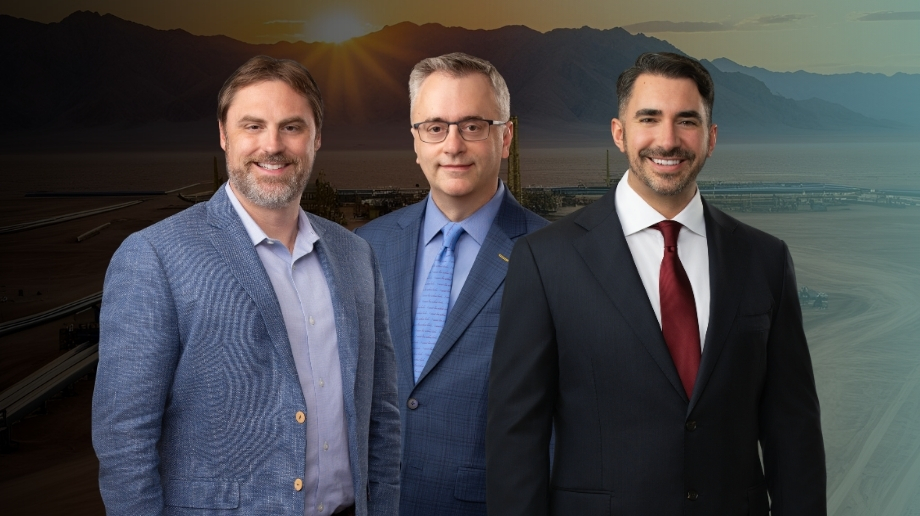
In this episode, Brad Gibbs, Zack Oliva, and Prof. Christopher Kulander explore recent landmark cases impacting title, leasing, and non-operated interests in Texas.
Featured cases:
- Cimarex v. Anadarko: Delving into lease extensions and production responsibilities
- Cromwell v. Onshore: Key insights from an amicus brief filed with the Texas Supreme Court
- PBEX v. Dorchester: Analyzing a first-of-its-kind adverse possession case among non-operated interests
Transcript
My name is Zach Oliva, and I’m one of the owners of Oliva Gibbs.
My name is Brad Gibbs, also one of the owners of Oliva Gibbs. Welcome to Good Energy Talks. Our special guest today is professor Chris Coolander from South Texas College of Law.
Hello. Yes. I am, professor Kulander, South Texas, and also of counsel here at Levitt Gibbs. So I’m happy to be here.
So in the Good Talks video series, what we do is bring in experts such as professor Kulander to talk about, important developments in the law as we are a a law firm that represents oil and gas companies. So we update our clients and the market on our perspectives on, some various cases that, are making their way through the court system, system, which could directly impact, our clients and their operations. So I think, what’s the first case that you wanna talk about today, Brad?
So there’s been some interesting cases that have been raising some eyebrows, across the industry and and particularly here in Texas that deal with non operated interests under joint operating agreements. And, the first of these was the Cimarex case that involved Anadarko, and it gave rise to what’s been sometimes referred to as an Anadarko washout because it seems that Anadarko is involved in quite a few of these. So in the Cimarex case, we saw an instance where, Anadarko basically came in and said, if you are a non operated lessee, and the language, sort of reads in a specific way under your lease, that your lease is not going to be extended into its primary term by, an operator’s activities.
So even though you have production on the lease, you could, in theory, lose your lease. This was somewhat surprising, across the industry. I think a lot of people didn’t expect this outcome. And shortly thereafter, and and working its way through the court systems now is the Cromwell case, which, it was, Cromwell, versus Onshore.
Onshore is also an Anadarko entity. And one of the reasons I thought this would be a good case to touch on today is because professor Coolander actually filed an amicus brief with the Texas Supreme Court in this case. And, Chris, if you wouldn’t mind telling us a little bit about the brief you wrote.
Well, it it started last year when, the Cimarex case was the first one you mentioned, Brad, was winding down.
And I I found I I discovered it when I was doing case law update, late enough in the cycle that I couldn’t, have any bearing on it. Didn’t I tried to jump in, couldn’t at the at that point, and then it was settled in a way that I thought wasn’t very good. And then, quite independently, the firm that was representing David Cromwell did not contact me. I found this case, come out of the court of appeals.
And I said, good heavens. It’s that fact pattern again. And by George, it’s the same company. So at this point, I contacted the firm.
I didn’t wanna step on any toes that’s representing Cromwell, and I said, do you mind if I write an amicus brief? And they once they stopped dancing around the table, they decided, well, yes. Please do that. In this brief, I say that the fact that that lease did not require production by the, non operating lessee meant that that lessee could rely on the production of the other party to take them into the secondary term of the lease.
I think it really comes down to that crux, and that’s what drove my amicus brief. It was a I’ve written a paper on Cimarex. It just came out in the UNT law review, last year. And so, basically, my brief was kind of a road map back to this case with UNT’s new law review.
So why did you why do you think that the case the first case didn’t get settled correctly?
In the the the first case, Cimarex, again, that lease said this lease will be held for x number of years and so long thereafter as production is maintained. Period. It didn’t say maintained by the lessee. It just said is maintained.
So real quick for the the folks watching, why is that significant?
It’s significant because it doesn’t have to be Cimarex in that case that achieves production by itself.
It can be any of the lessees because it the lease expressly does not require production by that particular lessee. And that’s a negotiated point in many leases. You’ll see a lot of leases that say production has to be maintained for the the the lease will last though so many years and so long thereafter as production is maintained by the lessee.
And in that instance, yes, Cimarex and Cromwell would have to produce themselves. But when you don’t have that language, and it would seem that they wouldn’t. And the court in Simrex just ignored that lack of language, which I found perplexing given the fact that they really take a microscope to the words in these cases, as Brad knows.
Yeah. And so in that case, in both of those cases, Anadarko made the argument that basically the only way to perpetuate a lease in Texas past its primary term if you are a non op lessee is to execute an operating agreement. And, the El Paso Court of Appeals, in in both of those cases, I believe those were both out of El Paso, weren’t they?
Perhaps or mid or Eastland.
I think maybe one of them was.
But either way, the court kinda doubled down in those cases and said that, you know, unless you have this operating agreement, there’s no way you’re gonna extend your lease.
They they kind of dismissed out of hand, any argument that might lead to a constructive operating agreement or any kind of constructive, mining partnership or anything like that. And, in your opinion, do you think that’s an overly strict reading then of the habendum clause in the lease?
Absolutely. Absolutely. And I don’t think it does justice to, the express terms or I would say the express omission of the words by the lessee. And when we look at the Cromwell case, we’re we see it going a little bit farther. Now they were asking the, Cromwell, the non operating lessee, do you wanna participate in this project, or are you gonna go non consent? And they were doing things that you find in a joint operating agreement, and yet they refused to sign a joint operating agreement. I would argue this is a mining partnership, and production by one should count as as as production by all unless the lease expressly provides for it, and it did not.
It seems like a very coercive tactic and one that could be right for abuse if the party is sort of holding the right to circulate the operating agreement, withholds it, and doesn’t give the nonoperated party the opportunity to enter into a negotiated JOA. So it’ll be interesting to see what the Supreme Court ultimately decides to do with these cases.
Yeah. And it’s really, I think, indicative of what’s going on when when you say a little a little coercive in a sense that who was the top lessee that was waiting for the bottom leases, for Cromwell, for Cimarex to go away? It was Anadarko. When you pull that mask off, oh, good heavens. Look at the party that was there, that was stiff arming, saying no JOA, and then they find themselves to be the lessee.
That’s interesting.
Speaking of the Cimarex and Cromwell cases, it’s an interesting time to be a non op JOA partner in Texas, especially in in light of the recent PBEX versus Dorchester case. And, that case, involved, another kind of washout. But in this case, it was an adverse possession case where one nonoperated interest adverse possessed another non operated interest. Kind of a case of, first impression not only in Texas, but but anywhere, I think as far as, anyone can tell. So, have you been following this case at all?
I have. And I tend to I have opinions, have opinions will travel. I tend to think that Dorchester has a pretty strong argument here. I think that when you look at some of the the common law tenants of adverse possession, paying the JIBs for the other party, taking part in decisions on whether or not operations are gonna go forward out there or when and whether or not they’re gonna participate, would really seem to me to meet these open and notorious possession, activities.
So my initial impression as this moves its way through is that Dorchester’s got a pretty strong argument.
One thing I thought was interesting in that case as well was that they said that, going nonconsent under the JOA did not interrupt adverse possession, and, that that it had been continuous, you know, through sort of the life of this interest. So certainly another interesting case, also pending before the Supreme Court. And, we’ll, we’ll watch that one. So, an exciting time if you’re a non op owner, probably a little bit of a scary time in Texas.
So so what are the dangers to non op owners?
Potentially that they would just lose their interest completely and that they would have very little power to do anything about it.
So what could non op owners, do moving forward in light of these cases?
Well, of course, the gold standard is going to be, sign an operating agreement, make sure that you have a clean chain of title to your interest, which is kind of what happened in the PBEX Dorchester case, and, to just make sure you’re really paying attention.
Yes. And I think one of the scary things too about these is if you’re a small interest and you’re required to produce, it might not be economically sensible for you to produce with, say, as in the Cimarex case, a one sixth of the interest.
So it might add another layer of analysis that you need to do in your operations?
Yes. And bring in accounting, to think, well, if we have to produce ourselves, is it gonna make sense to do that?
So this could lead to a lot of, you know, both economic waste and, depletion of the reservoir if you’re saying that every working interest owner has to drill their own well or be Anadarko washed out, you know, on their interest. And, so it’s, it’s gonna be interesting to see where this goes. Obviously, that would lead to a lot of inefficiency, you know, cluttering the field again, going back to a spindle top type scenario where everybody’s rushing in to drill their own well to maintain their lease. I have a feeling that, even, if you just look at equitably, the Texas Supreme Court is not going to necessarily like that outcome, but they’ve surprised us before.
So would they consider that outcome in their decision?
I I believe they would. It’s it’s certainly been well played in the briefs up until now.
So They yeah.
The Texas Supreme Court recently asked for a briefing from both sides in the Cromwell case. And, both parties have responded.
And so, we’ll see where that goes, in the future.
I’m I wouldn’t be surprised at all if the Texas Supreme Court takes up Cromwell.
And if it goes the other way, kinda cold comfort for Cimarex because that case has already been decided.
So thank you everyone for watching this episode of Good Energy Talks. I’m Zach Oliva. This is Brad Gibbs. Brad, if you can give us a rundown of the cases that we discussed today. Sure.
Today, we talked about the Cimarex case, the Cromwell case, and the PBEX versus Dorchester case. These are all cases relating to operating agreements and non operated interests in Texas, and all great cases to be aware of if you own non non op interests.
Brad and our team frequently write and present on, you know, the most recent and pressing issues in the energy industry. You can find those on our website, on our LinkedIn, YouTube, Twitter, I think.
Also, if you’re a non op company, this is an especially important episode for you to watch because professor Koolander gave us, some great insight on how these cases directly affect, your operations moving forward, and for things to watch out, as these cases come down from, the higher courts. Professor Coolander, thank you very much for being with us today.
You’re welcome. Appreciate it.
Appreciate your time.
Thank you.
Thank you.
Featured in this podcast



Related resources
-
EES Replay – Navigating North Dakota Riverlands: The Evolution of Title, Sovereign Ownership & the 2025 Continental Decision

-
Energy Education Series – The History of Land Title in Texas

-
When an active well doesn’t hold a lease: MBI Oil & Gas, LLC v. Royalty Interests Partnership, LP, No. 24-2031 (8th Cir. July 25, 2025)
Get expert legal guidance today
Contact us today to discuss your legal needs in oil, gas, and mineral development.